
The world’s first market-ready wireless charging system for electric cars has been launched in London.
The system, launched by start-up business, HaloIPT, part-owned by the global design consultancy ARUP, promises secure and simple on-street charging and could eventually increase EV range by ‘electrifying’ motorways such as the M25.
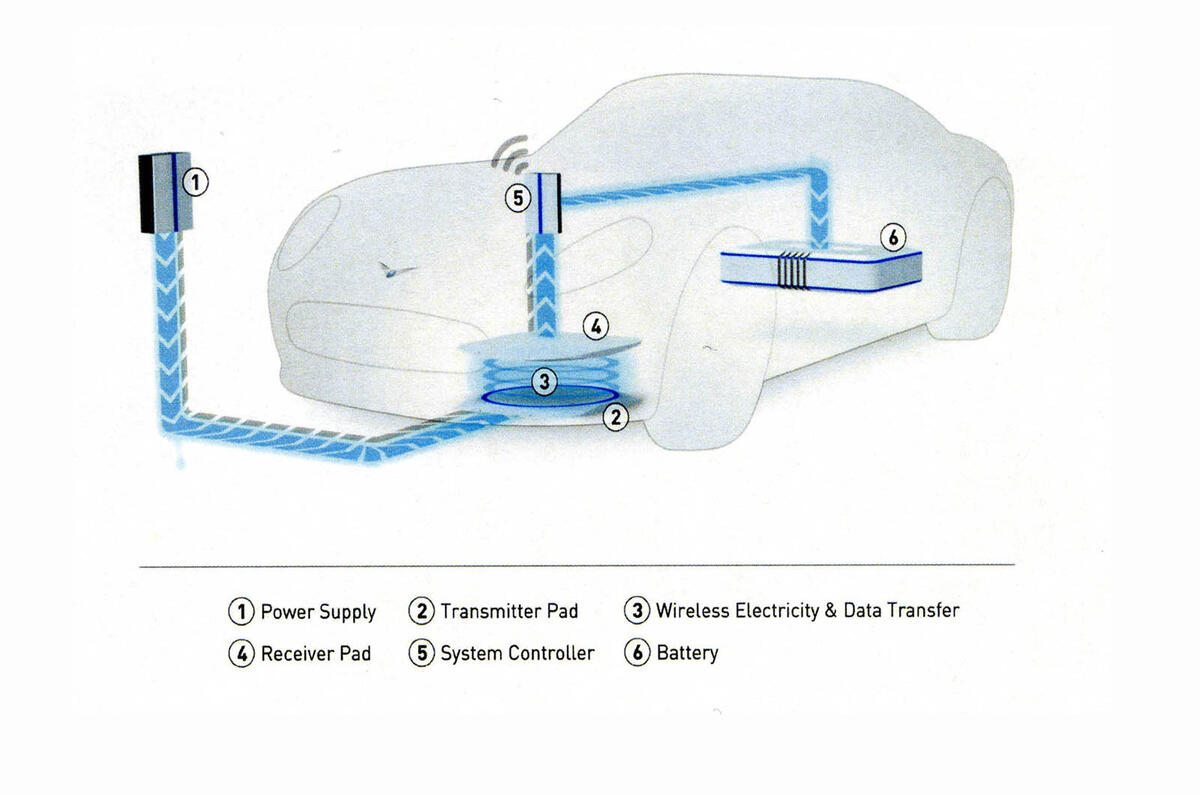
The charging system – which depends on principles discovered in the early 1800s and refined in modern industry for 20 years – allows a car fitted with a simple integrated receiver pad to charge automatically when parked or driven on roads with HaloIPT’s special charging pads beneath their surface.
The system can be configured to power all vehicles, from earthmovers to microcars, and is developed to be tolerant of misalignment by the driver, and safe from hazards such as ice and snow, or even animals sitting under cars.
Called IPT (for Induction Power Transfer), the system offers very similar charging performance to the charging post and cable more common today.
A typical city car like the Electric Car Company’s Citroën C1-based Evie, which is currently being used extensively for UK road trials, can be fully charged from about 20 per cent in six to seven hours, using a regular household socket. The system can work over air gaps up to 40 centimetres, considerably more than an average car’s ground clearance.
Read Autocar's review of the Nissan Leaf
HaloIPT’s CEO, Anthony Thomson, likens the move from sockets and cables to wireless charging as similar to society’s adoption of mobile phones and wi-fi.
“We’re using IPT to break down the barriers to mass-market adoption of electric cars,” he says. “Keeping electric vehicle costs down is a key priority for us.”
If fitted with wireless charging, HaloIPT believes an electric vehicle’s emissions should be around one-third of those of a similar petrol vehicle by 2030, taking into account lifetime carbon use, the electricity generation process and the systems needed to deliver petrol/diesel to conventional vehicles.
Collaborative companies, Delphi Automotive and WiTricity, are currently in the development stages of a similar system, which will also charge EVs wirelessly.
Read about Delphi Automotive and WiTricity's wireless charging plans