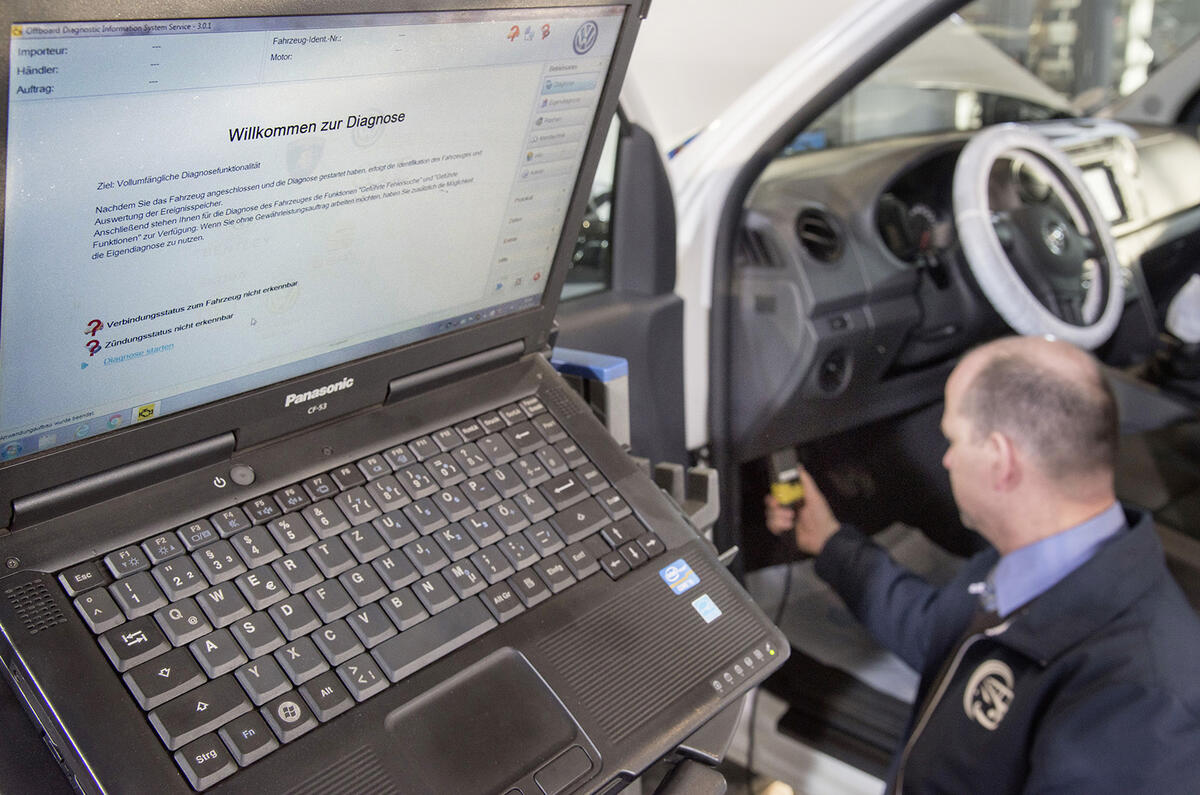

New legislation for both the European Union and the UK, in response to the Volkswagen dieselgate scandal, will tighten rules on vehicle type approval and emissions testing.
Measures proposed for the EU would require better policing of type approval procedures and audits of vehicle test houses by both experts from EU member states and the European Commission itself, as well as regular inspections by national type approval authorities, which themselves would be subject to periodic peer review.
Testing houses would also become more independent, and not be allowed to receive money from vehicle manufacturers to test cars and components. Instead, fees will be paid by manufacturers to EU member states and then paid out to the testing houses.
If manufacturers offer fake declarations or use a defeat device similar to that used by Volkswagen, they could face a fine of up to €30,000 – similar to the $37,500 penalties available under the USA’s Clean Air Act. Test houses could also be fined.
The UK government is forming a new market surveillance unit with a particular focus on emissions. It will combine elements of the Vehicle Certification Agency (VCA) and the Driver and Vehicle Standards Agency (DVSA). It will have an annual budget of £1m and also look at spare parts like tyres and catalytic converters.
The details emerged in a series of letters published this month by the House of Commons Transport Committee. In them, Louise Ellman MP, chair of the committee, describes the current legal framework that governs emissions testing as “unfit for purpose”, particularly when it comes to enforcing the rules. This follows Volkswagen’s ability to cheat government vehicle type approval using software that recognised when a vehicle was being tested and reduce the car’s emissions levels accordingly.
Antti Peltomäki, the deputy director-general of the European Commission’s enterprise department, responded to Ellman’s criticism by outlining how the new legislation should improve matters.Only Volkswagen has been found to have used defeat devices to get around emissions test regulations, but tests in the UK and Germany showed vehicles from several other manufacturers produced considerably higher emissions in the real world than in lab test conditions.
Much of this was due to exhaust gas recirculation (EGR) systems, which reduce NOx emissions, but only work in low-temperature ranges and switch off when the engine gets hotter. Current EU regulations allow this is the switch off is to prevent damage to the engine – a loophole that UK transport minister Robert Goodwill described as “a major weakness in the current system and one that need attention.”