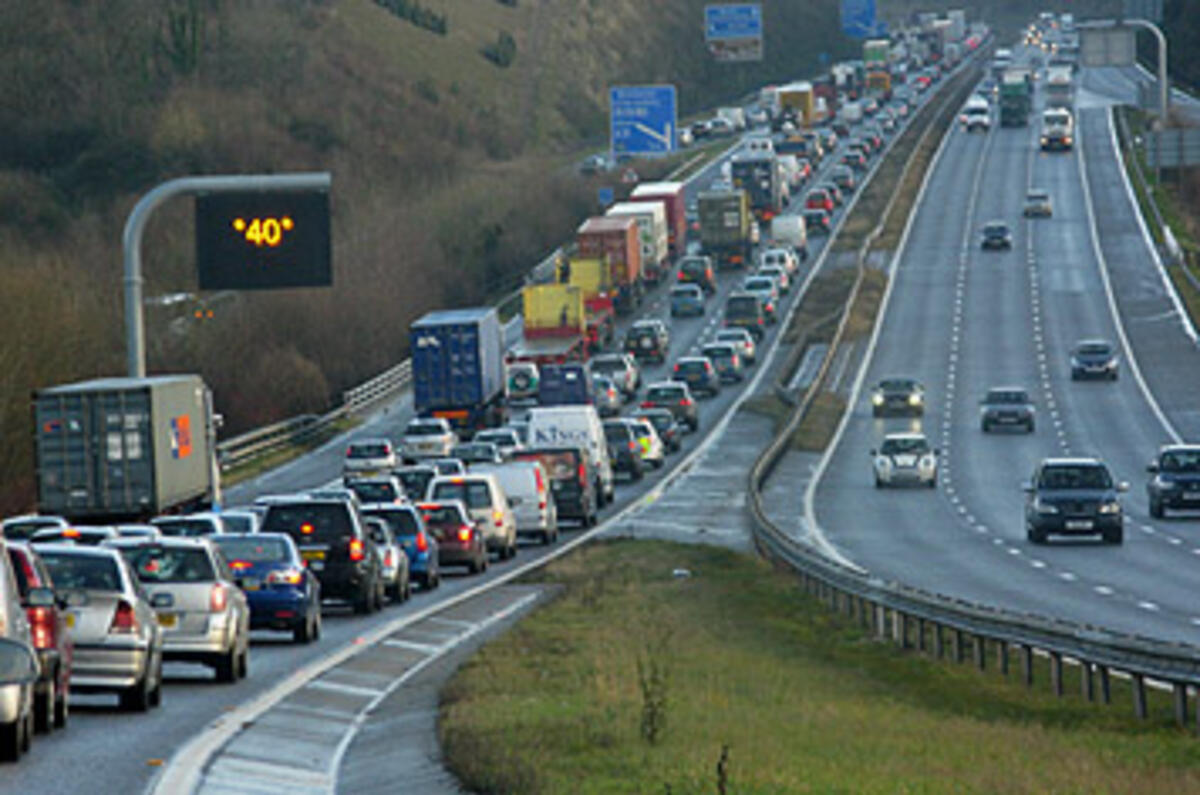

Traffic jams can be predicted by a new formula developed by mathematicians at the Massachusetts Institute of Technology (MIT).
The research, that predicts the occurrence of “phantom” jams, could lead to better road designs in future.
“Phantom” jams are those not caused by accidents or roadworks, but due to small disturbances in high density traffic such as a driver braking too hard.
This then becomes amplified as the cars behind react more strongly, leading to a self-sustaining jam as cars are forced to stop to avoid slowing cars in front of them.
The formula developed, based on the equations that describe detonation waves caused by explosions, describes how and under what conditions such jams form.
The MIT team said: “Variables such as traffic speed and traffic density are used to calculate the conditions under which a [phantom jam] will form and how fast it will spread.”
The model will not help break up jams once they have formed, but it will allow planners to predict where jams are most likely to occur.
This knowledge could help them to determine safe speed limits, and identify potential accident hotspots where the traffic density is greatest.
Further down the line, it could allow engineers to design roads that prevent traffic from building up dangerously.