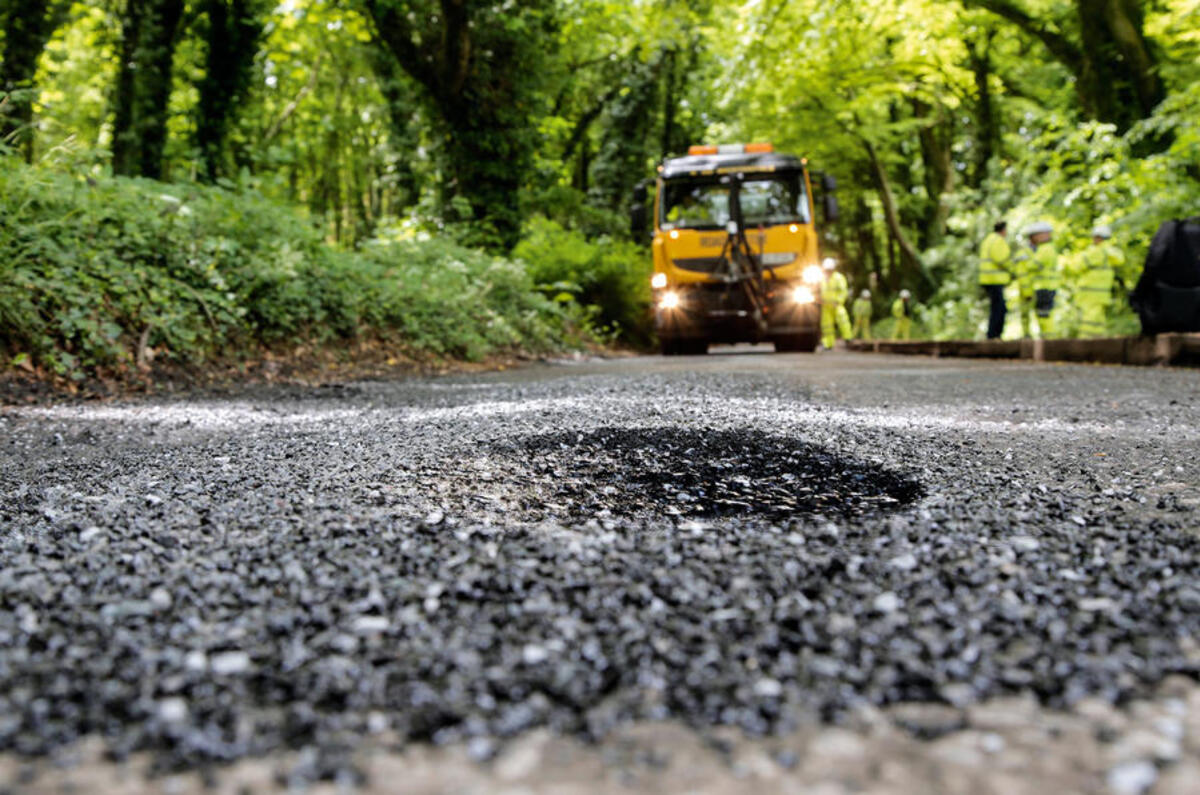
The Government has announced that it will begin real-world tests of new road surface technology that will seek to identify a more effective method of repairing potholes – and even stop them forming in the first place.
The scheme, announced by transport secretary Chris Grayling, is called Live Labs and will operate with £22.9 million of government backing. So far, eight authorities have elected to take part, including Buckinghamshire, Staffordshire, Kent, Birmingham and Reading.
Each location will try a different type of technology. Central Bedfordshire won a £1.05m share of the funding to test solar power in footways and a “power road” solution that collects geothermal energy to de-ice car parks and bus stations, preventing pothole formation. Cumbria has been allocated £1.6m to extend its existing plastic roads trial and produce guidance on the use of the new surface material.
Last year, the Government announced that it would provide councils access to a £100m fund to help repair potholes.

But although the Government has stressed a focus on pothole repair, with Grayling stating “potholes are the number one enemy for road users”, only a small percentage of Live Labs will directly investigate this. The majority of funding will instead go towards data monitoring.
Reading, which has received the largest share of the funding, at £4.75m, will trial the use of traffic signal detectors and mobile phone data to provide a real-time view of Thames Valley traffic and produce a ‘public health exposure model’. Solihull and Birmingham will spend £2.65m on the tracking of vehicle journey times and cyclist and pedestrian behaviour via video monitoring to investigate how push messaging will enable people to make better travel decisions.