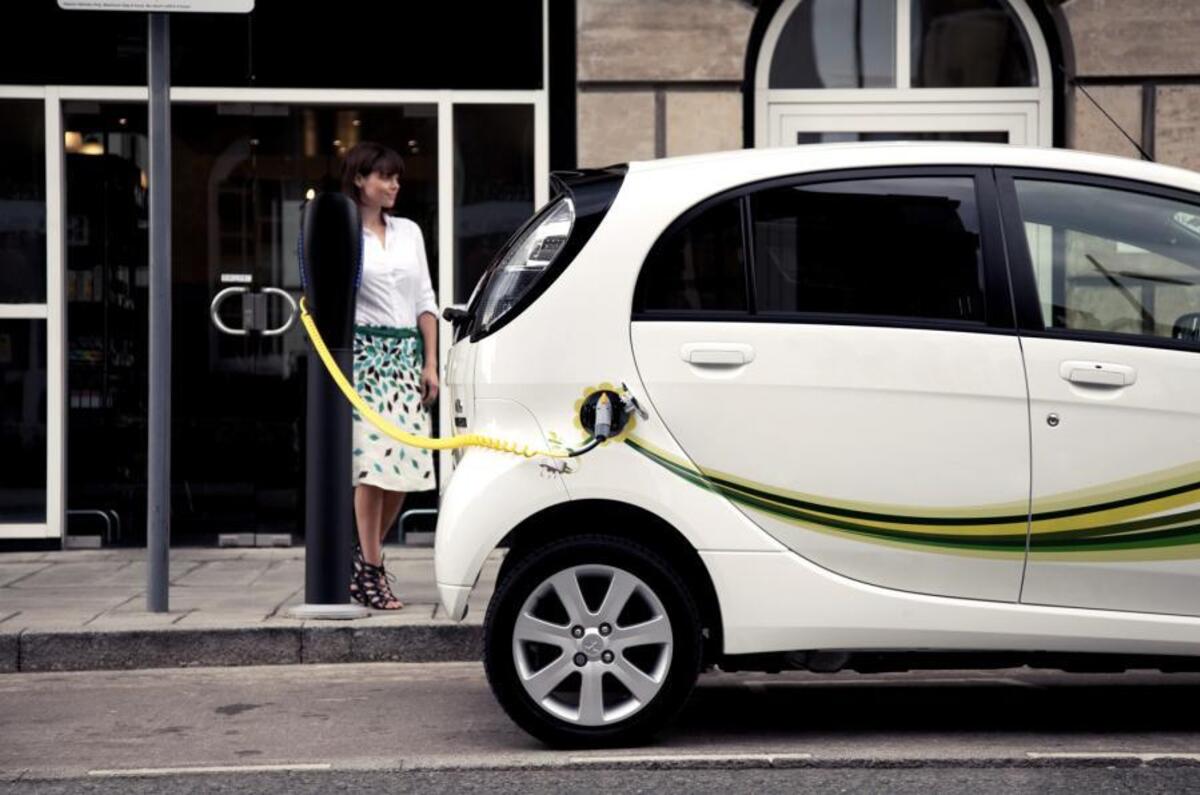

Transport secretary Chris Grayling has proposed that new-build homes, as well as street lights in certain strategic areas, should be required to have electric vehicle chargers.
Grayling’s proposals, part of the Government’s wider Road to Zero strategy to cut emissions from road transport to zero, aim to encourage the public to buy EVs and boost the availability of EV chargers, reports the BBC.
New homes and offices will be considered for new charge points, if the proposals are put into practice, while long-suggested lamp post-based chargers will also be implemented.
"The prize is not just a cleaner and healthier environment but a UK economy fit for the future and the chance to win a substantial slice of a market estimated to be worth up to £7.6 trillion by 2050," said Grayling.
The European Automobile Manufacturers' Association (ACEA) recently revealed that the UK accounts for 12% of all EV chargers in the European Union — the fourth-highest proportion in the region. Only France (14%), Germany (22%) and the Netherlands (28%) have more.
There are around 100,000 charge points for EVs across the EU, although the European Commission has estimated that, by 2025, two million will be required to keep up with increased demand from an exploding EV market.
Critics have previously pointed out that home-based EV chargers are only of use for those with access to them; those who live in blocks of flats won’t have such a luxury.
Erik Fairbairn, CEO of charge point provider Pod Point, said: “The strategy shows some sensible proposals to increase the amount of EV charging infrastructure across the UK, with a good understanding of the need to roll out charging across homes, workplace and public locations.
“The strategy, however, is disappointing in that there is no movement on the Government’s 2040 ban of internal combustion vehicles. At Pod Point, we see a clear path which would allow internal combustion vehicles to be banned in 2030 — some 10 years earlier.”
Despite growing investment — both legislative and financial — from the Government, manufacturers still need to address the issue of range in cars, says the RAC’s head of roads policy, Nicholas Lyes: "Motorists' concerns about the limited range offered by electric vehicles needs to be addressed head on. Manufacturers have a role to play here, but so too does the Government in ensuring the necessary rapid charge infrastructure exists.