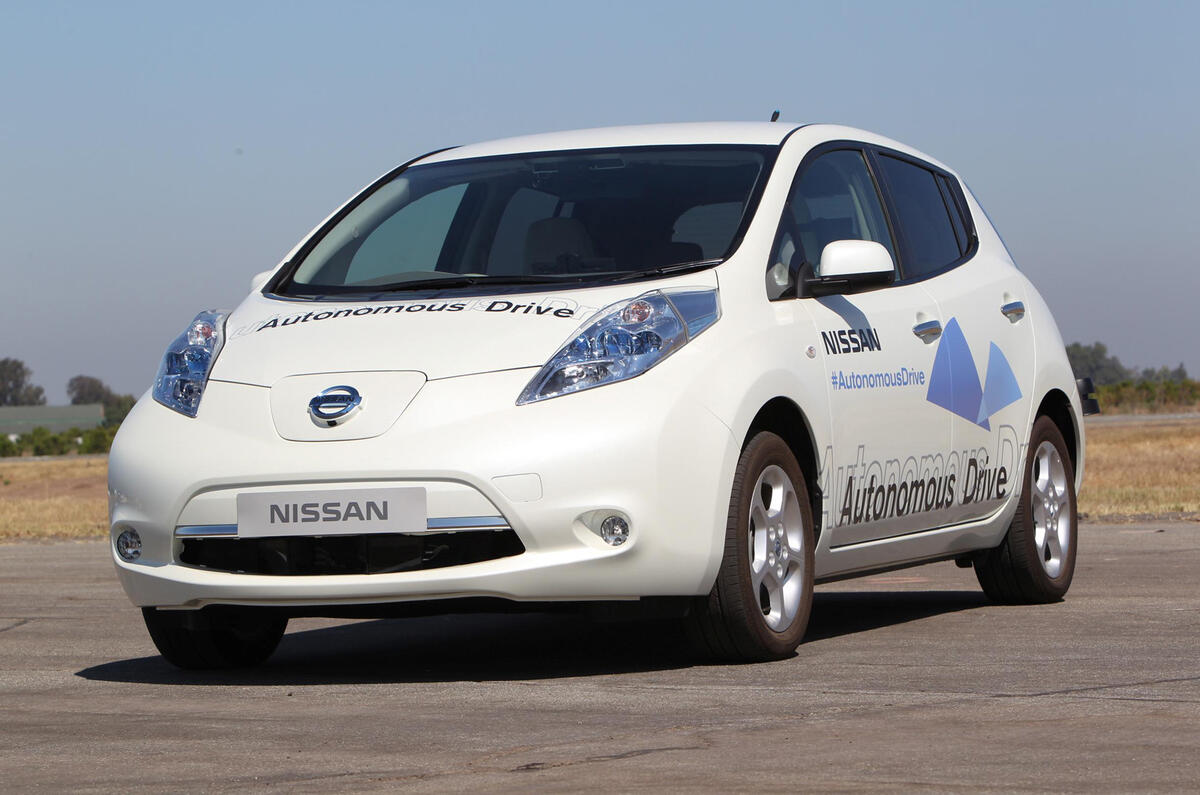

Nissan plans to introduce commercially viable autonomous vehicles within seven years.
The company laid out its plans to make autonomous drive available across its range within two model generations. It also revealed engineers are already working with leading universities to develop the technology.
The manufacturer outlined three benefits of autonomous drive: minimising the time wasted by driving; eradicating accidents caused by human error and providing personal mobility for people with disability.
In a statement, Renault-Nissan CEO Carlos Ghosn said: "Nissan’s willingness to question conventional thinking is what sets us apart". He also claimed the project is on target for launch by 2020.
GM has also previously stated 2020 as its target for automous vehicles, the same year as Volvo's claim that no one will be killed in a new Volvo.
Building work is underway in Japan for the world’s first autonomous vehicle proving ground. Featuring mock townscapes and buildings, the facility will allow Nissan to test their autonomous vehicles in a controlled urban environment. Nissan aims to complete the facility by the end of the 2014 financial year.
The company is currently demonstrating autonomous drive technology with a fleet of Nissan Leaf vehicles at the Nissan 360 event in South California. Technology on show includes laser scanners; 360 degree cameras and advanced artificial intelligence, allowing the cars to navigate complex driving scenarios without human intervention.
Nissan is confident as a result of its technological advances, its autonomous vehicles will be able to drive, change lanes and avoid collisions without a pre-installed map. Its next target is to incorporate these technologies into navigation systems – allowing cars to complete entire journeys without human input.
Nissan will also recalibrate its vehicle safety systems, as the autonomous technology can react more quickly than human drivers.
Josh Woodcock