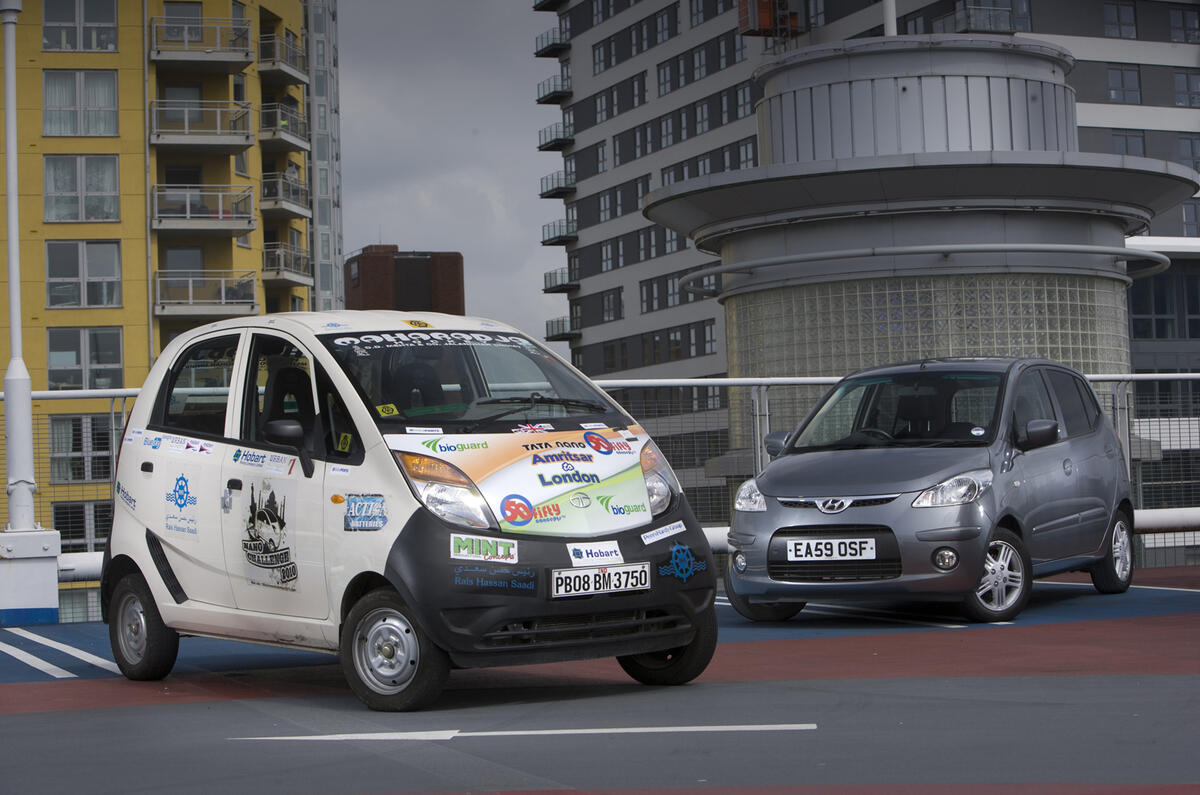
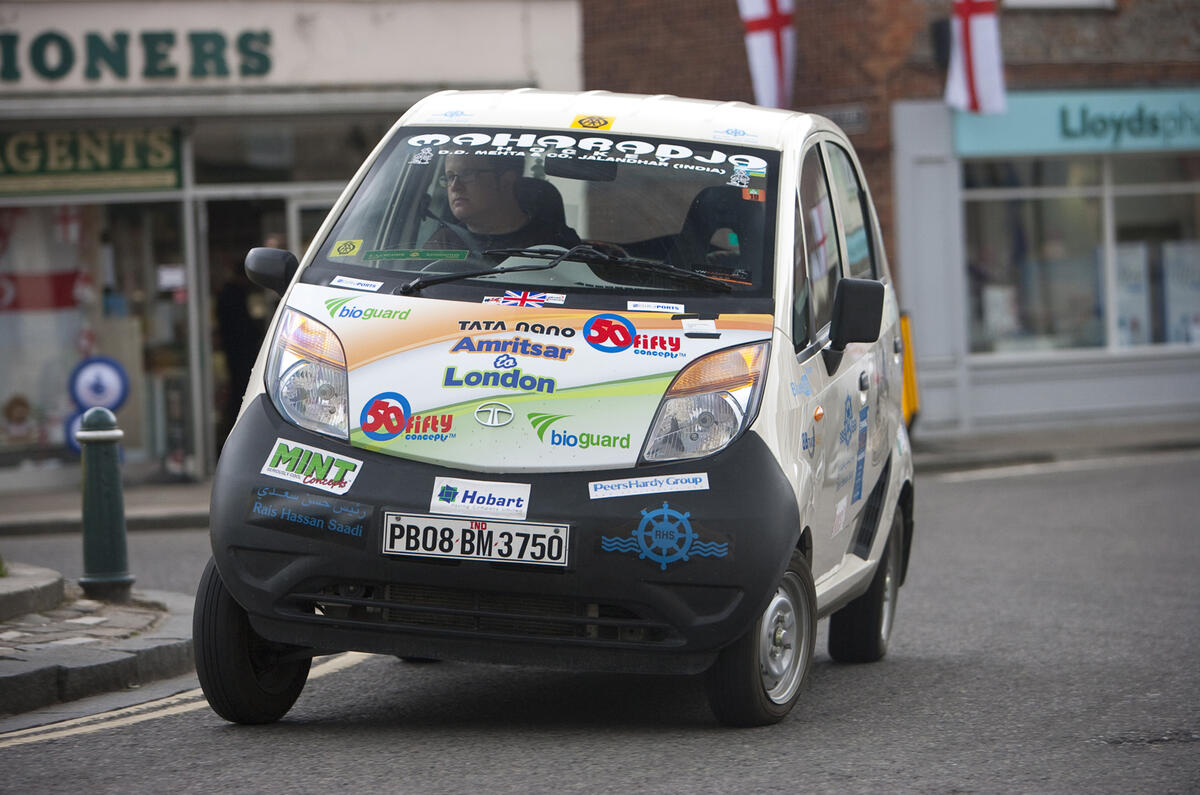
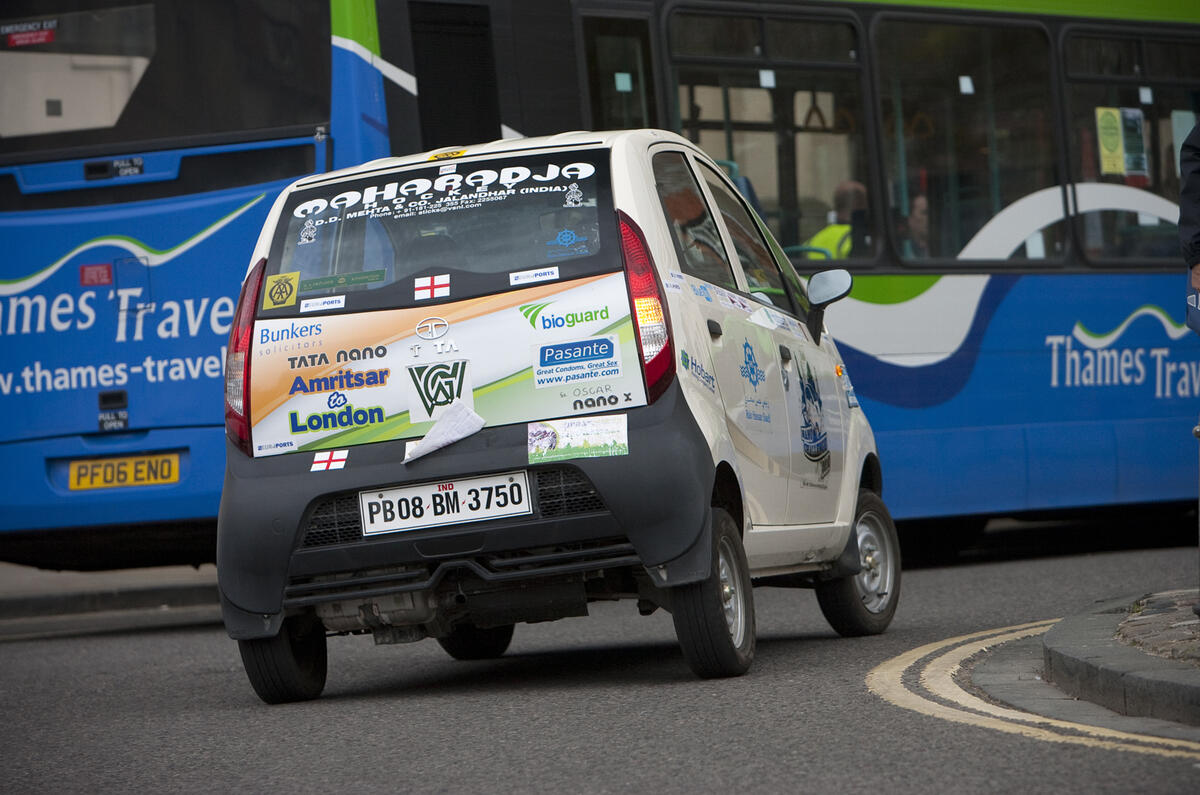









The Tata Nano has given new meaning to the word affordable, but how will it cope with the day-to-day demands of running in Britain?
Will a car with just 33bhp – and one that takes in excess of 30 seconds to hit 60mph and runs out of puff entirely not far north of 65mph – seem entirely unsuitable for our roads?
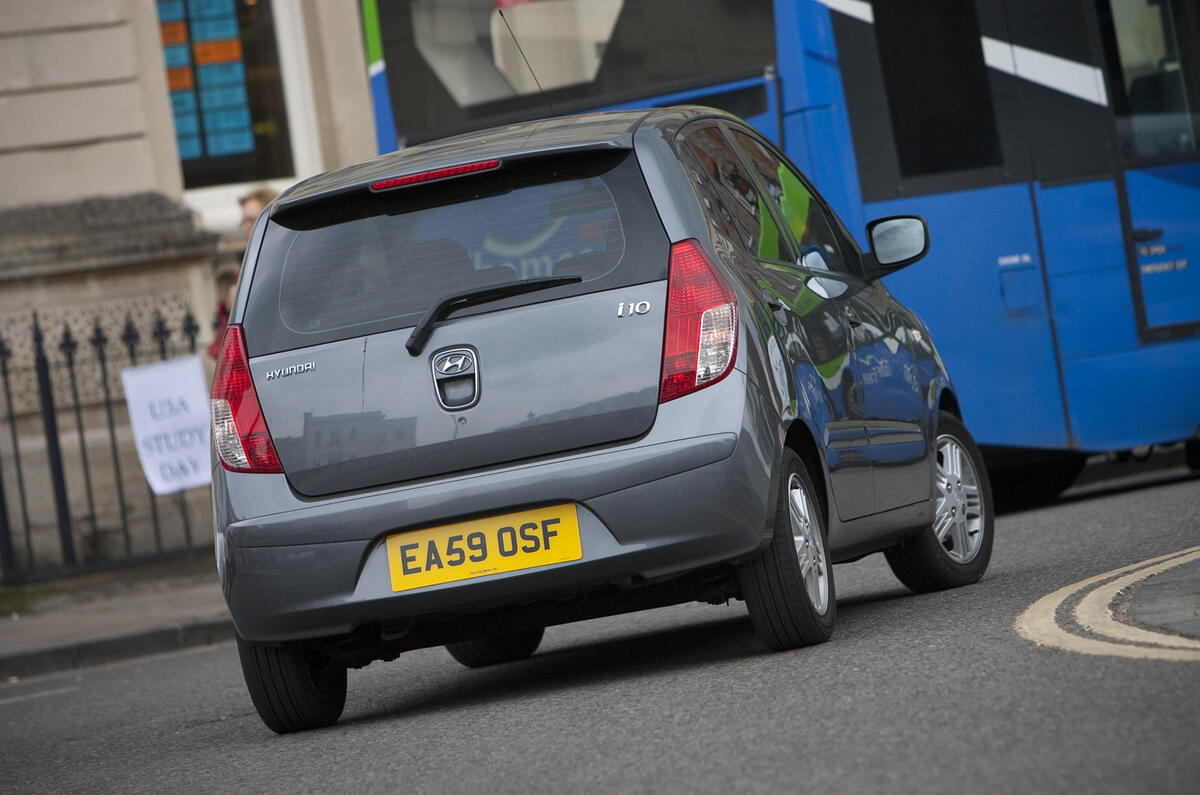
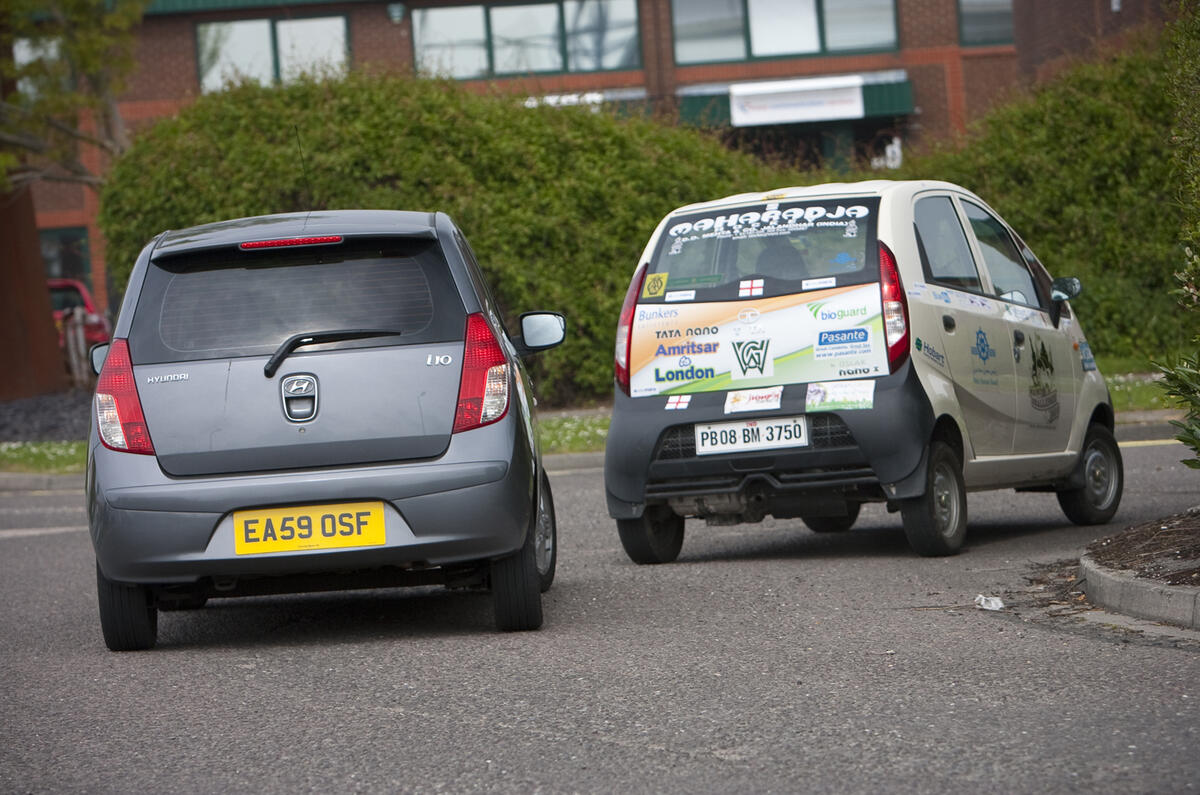
See the Hyundai i10 versus Tata Nano test pics
Will the compromises that its £2250 price places on refinement, handling, quality and performance perhaps seem too great for our Western palettes to bear?
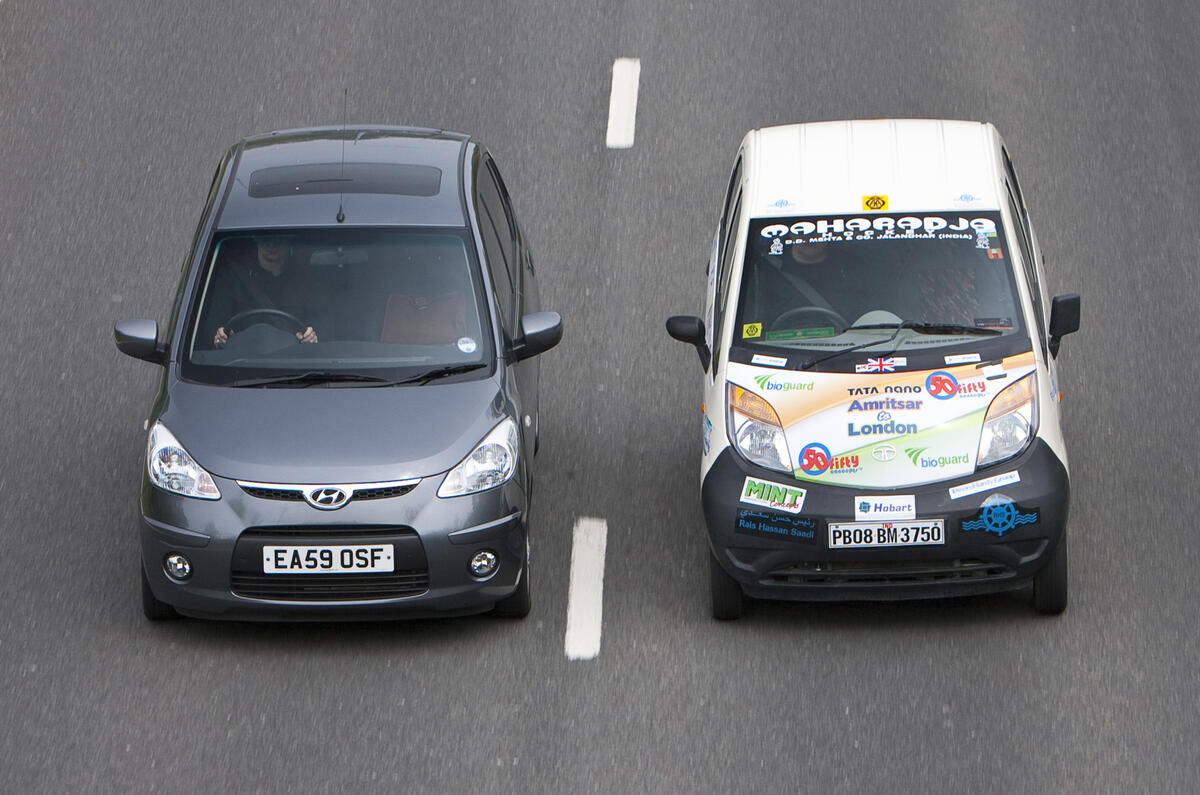
And will the world’s cheapest car look too cheap next to the best-value city car offered to British buyers in recent years: Hyundai’s i10?
Delivery mileage only
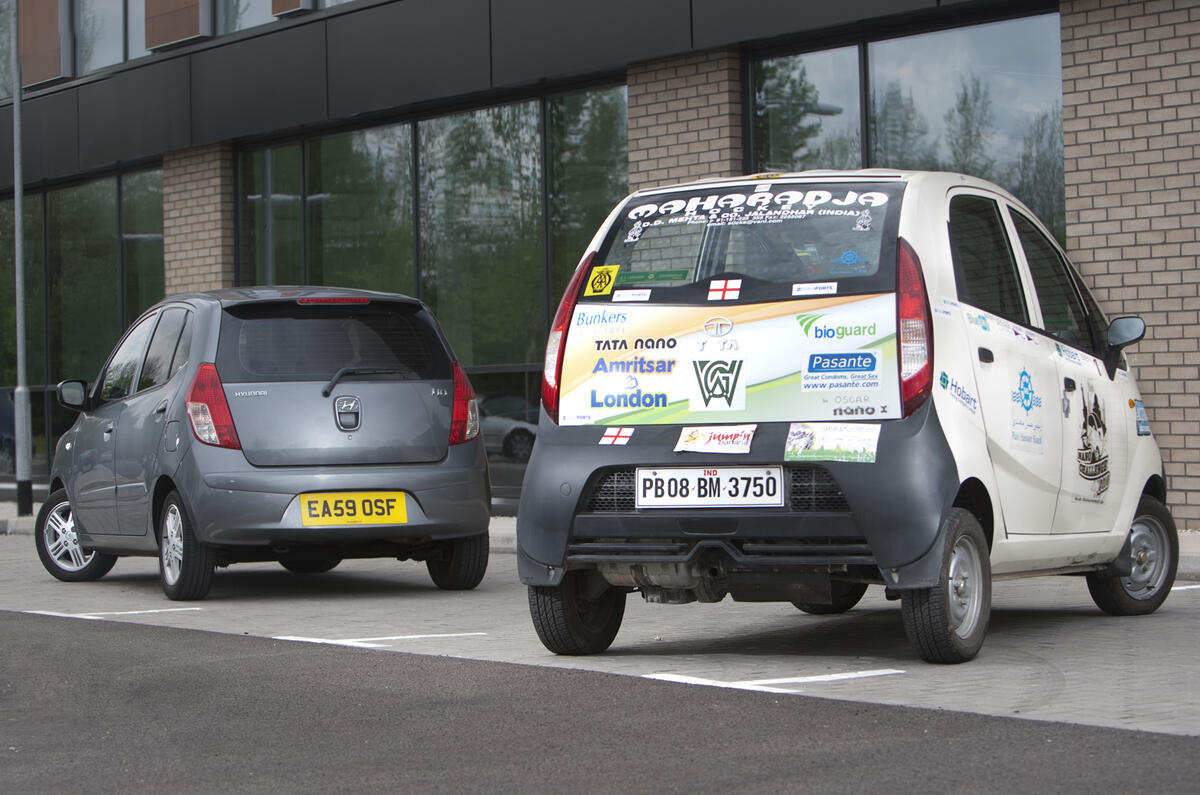
The Nano has been supplied by Richard Cruttenden, who bought it in India and drove it over 6000 miles back to the UK. Yet inside and out, it shows little evidence of the adventures it has been through.
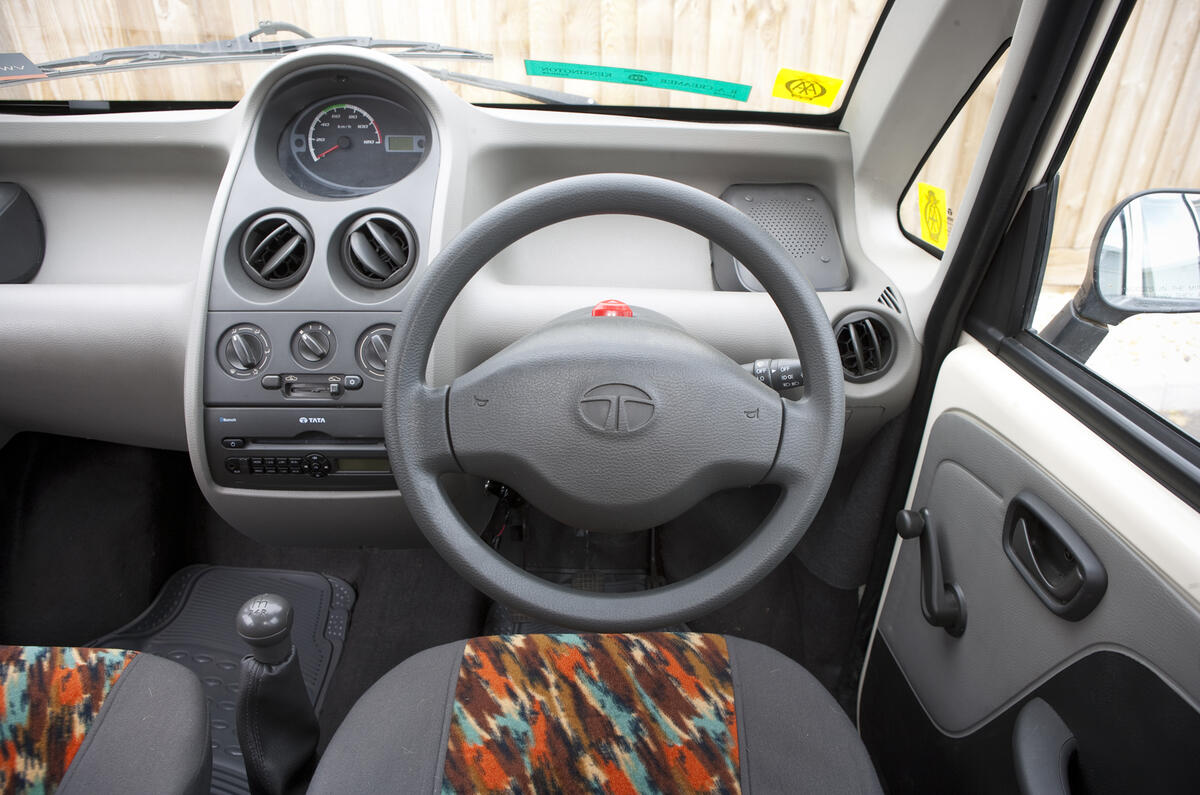
The driver’s door feels very light, but once you are settled in you soon get comfy. The steering wheel sits a little low and doesn’t adjust, but that’s it.
You get a lot of space for your money. At less than 3.1 metres it’s barely 10cm longer than a Toyota iQ, yet it’s a proper four-seat family car with bags of head and shoulder room.
The engine is a two-cylinder 624cc petrol two-valver with a single overhead cam, and it’s buried under the boot floor. Although it’s noiser than most superminis, it has multi-point fuel injection, a balancer shaft and special Bosch ECU.
Across quiet rural routes the Nano feels unexpectedly comfortable. Up to 50mph you can keep up with most traffic if you know how hard to work the engine and when to change gear – there’s no rev counter or shift lights to help. Corners do induce bodyroll, but grip at the front wheels is decent enough.
Life on a multi-laner is unenjoyable, though. The rev limiter intervenes at 65mph, but even at 60mph this car lacks the basic directional stability, chassis control and stopping power to give confidence.
Oddly, where you’d expect the Nano to impress – in the city – it’s only okay. Visibility is excellent and there’s – just – enough power to nip into gaps, but the unpowered steering can get cumbersome and there’s not enough compliance in the Nano’s chassis to soak up broken surfaces.
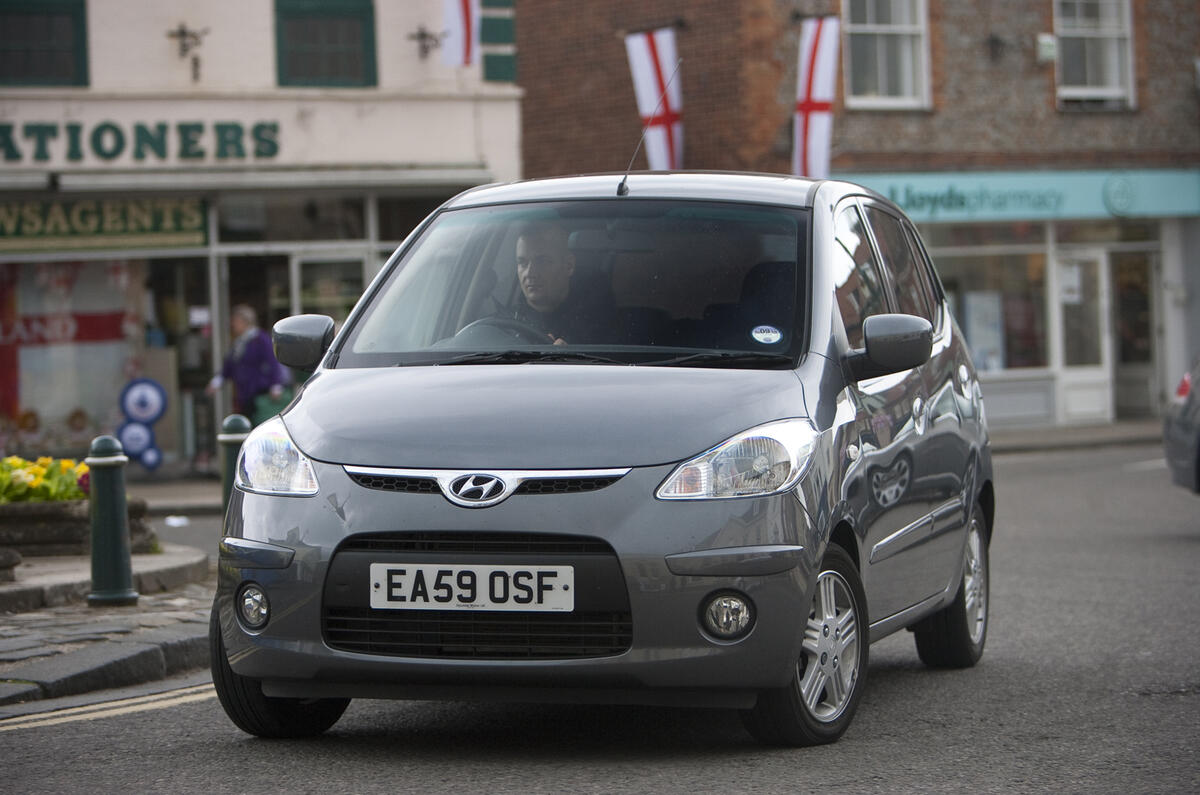
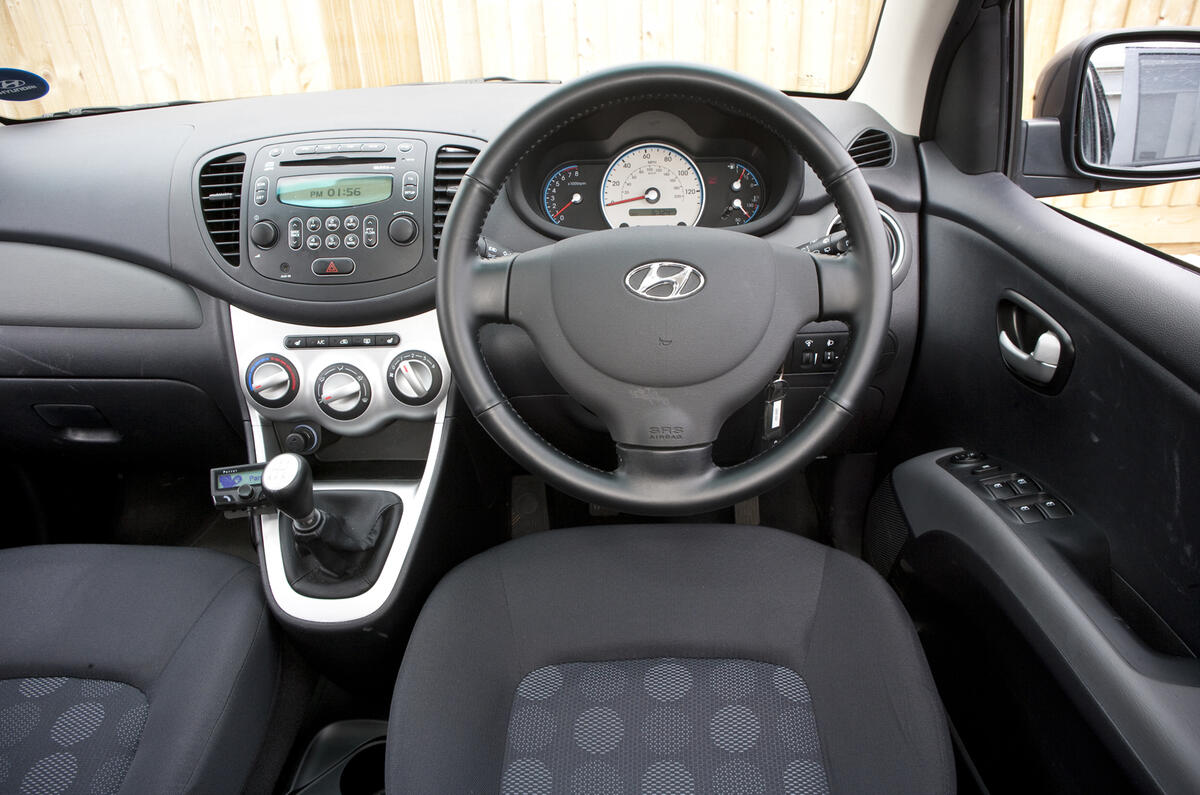
The i10
How does a Hyundai i10 feel after this? Sublime. Like a new Mercedes C-class after a tired, ten-year-old Vectra.